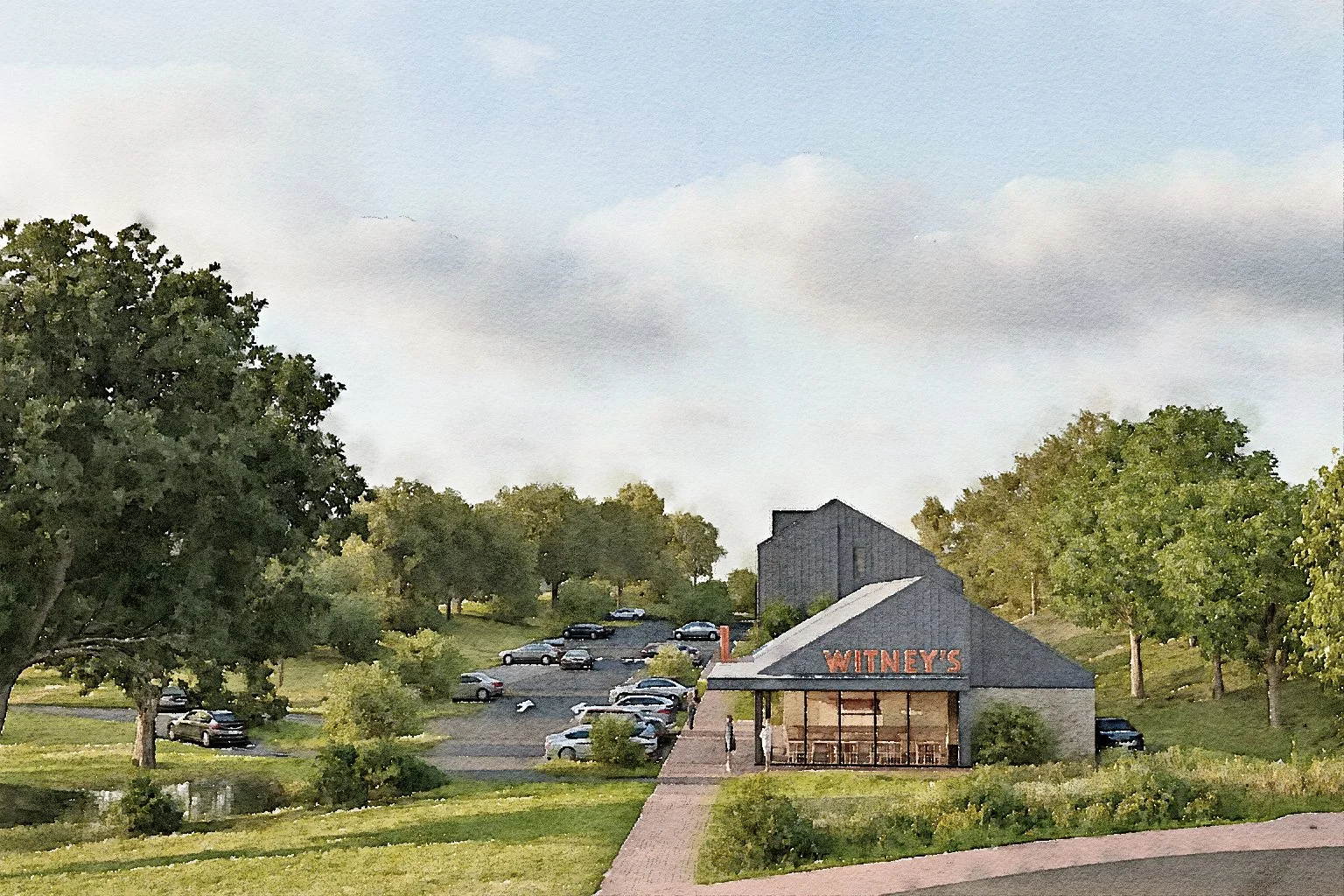
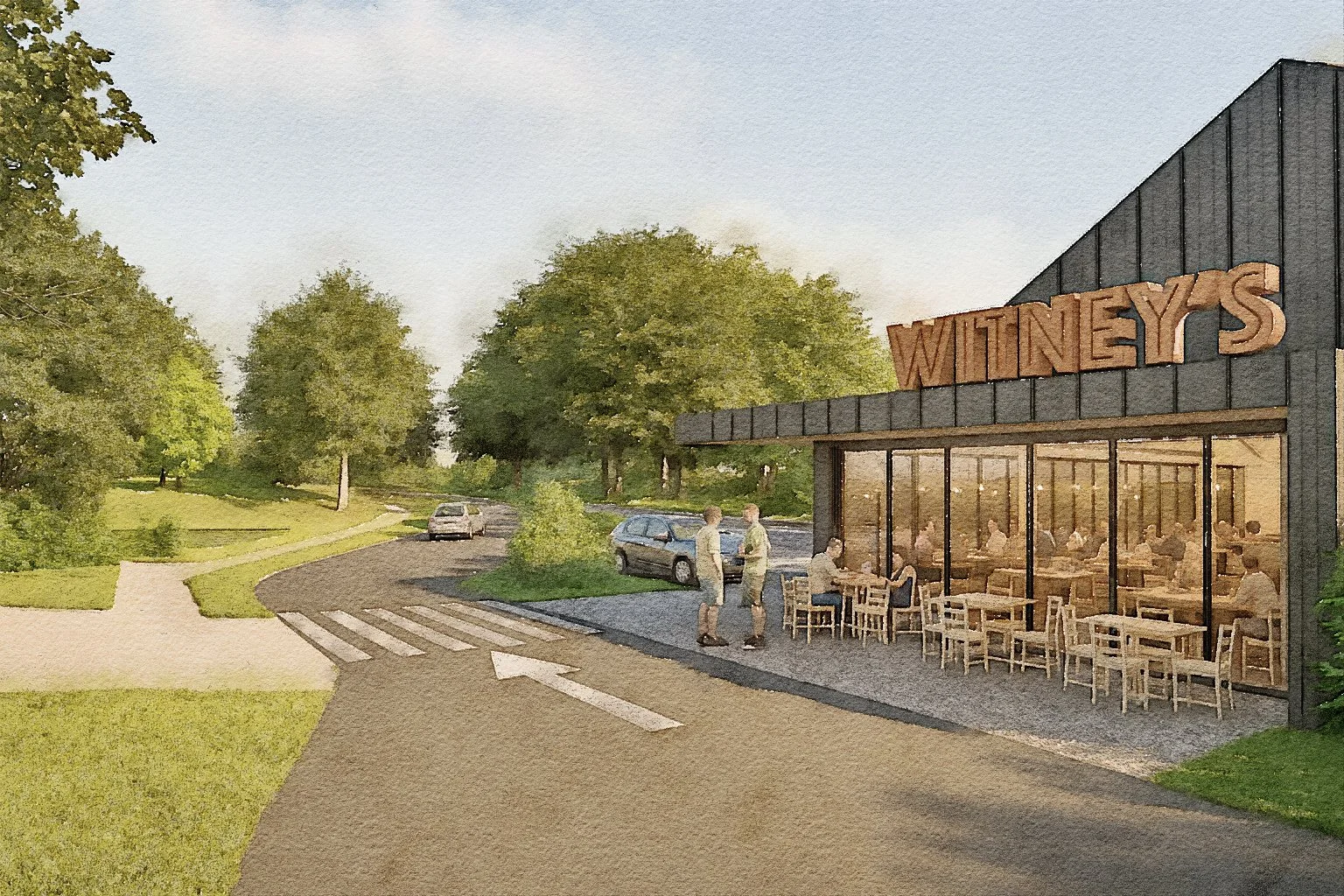
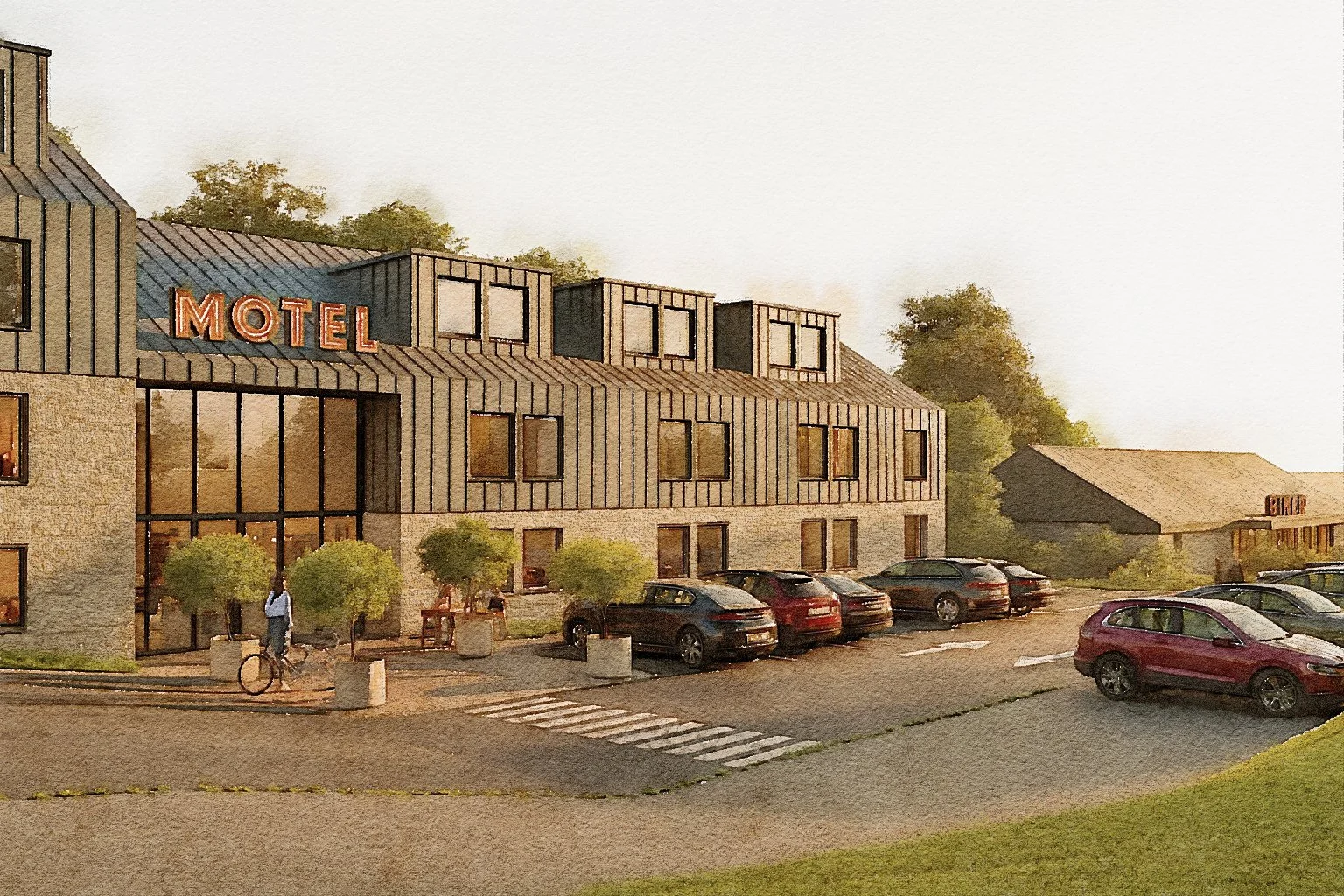
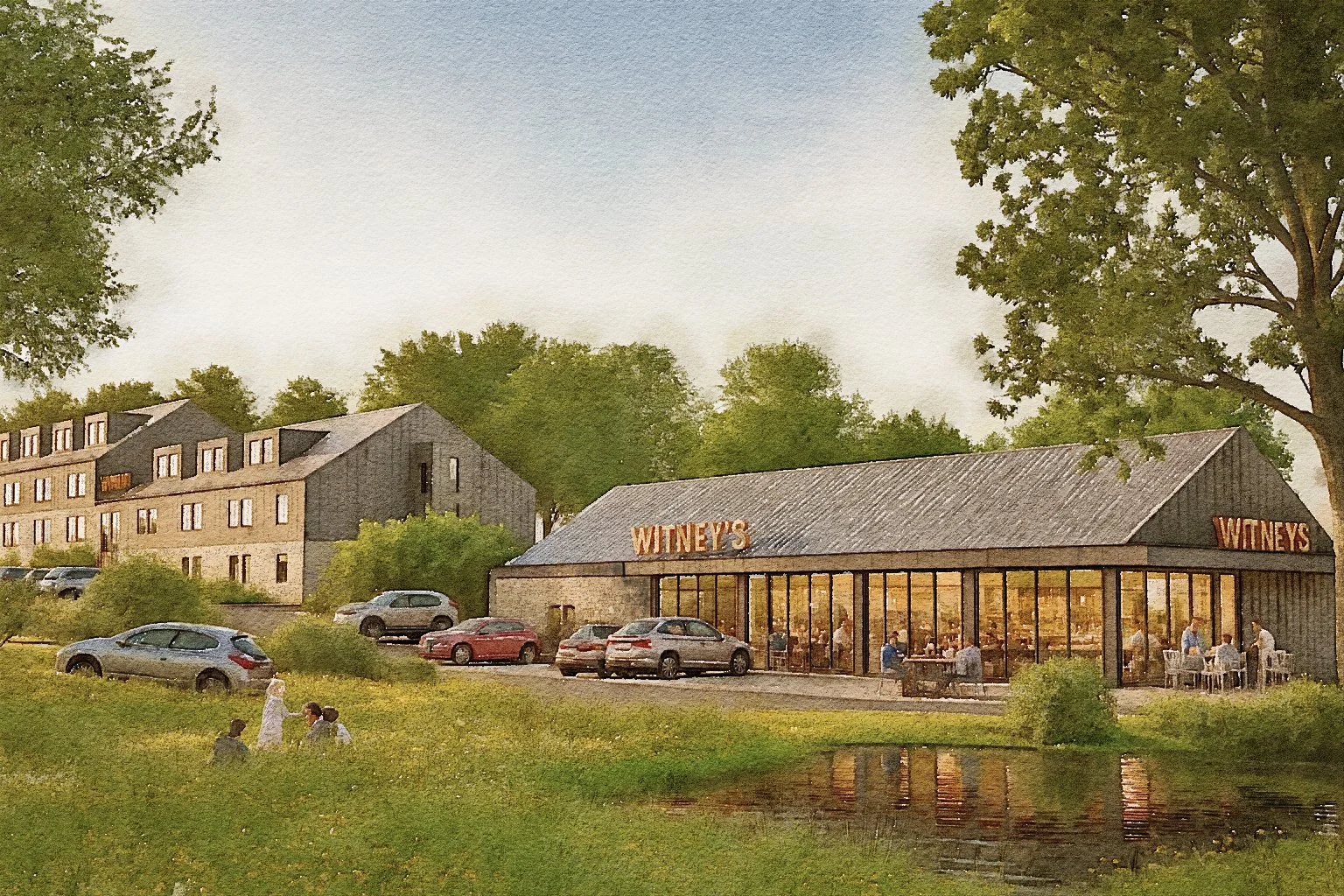
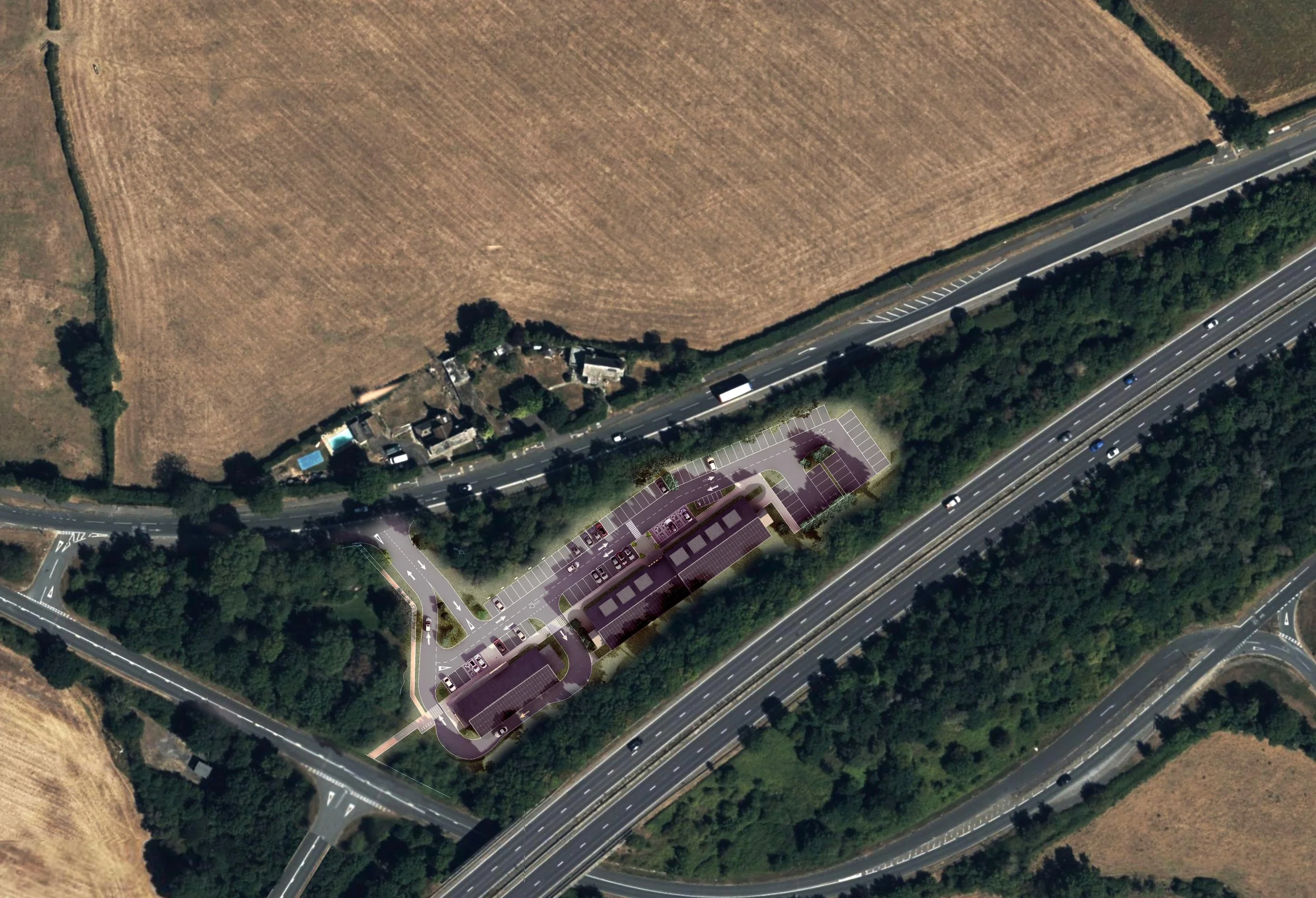
The Paddocks is a proposed 70-room motel and diner with drive-through at Shores Green, occupying a highly visible site alongside the A40 at the new junction on Witney’s eastern approach. The site has been recently enhanced by major highway investment at the junction and is currently under-used, making it well suited to a high quality roadside destination.
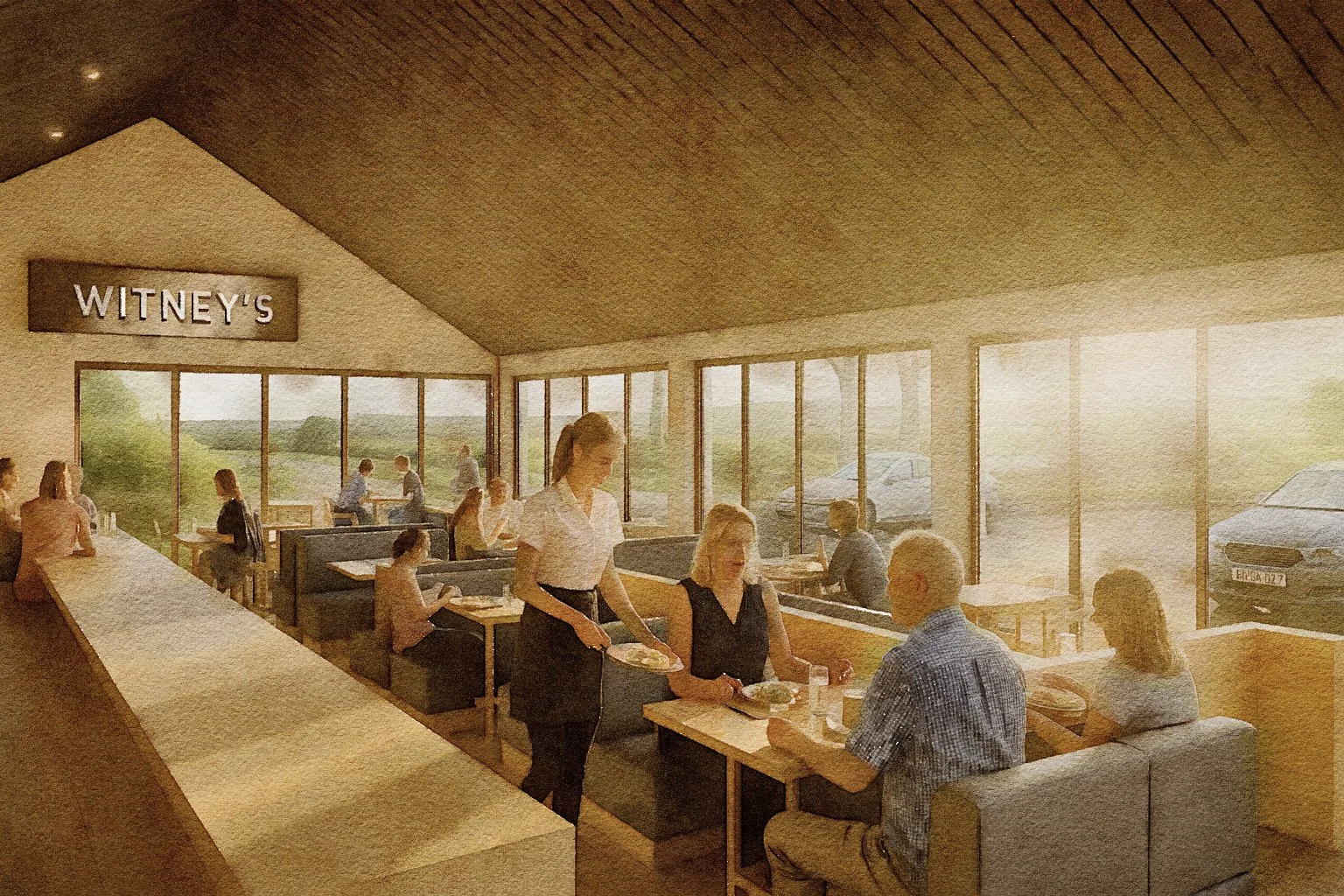
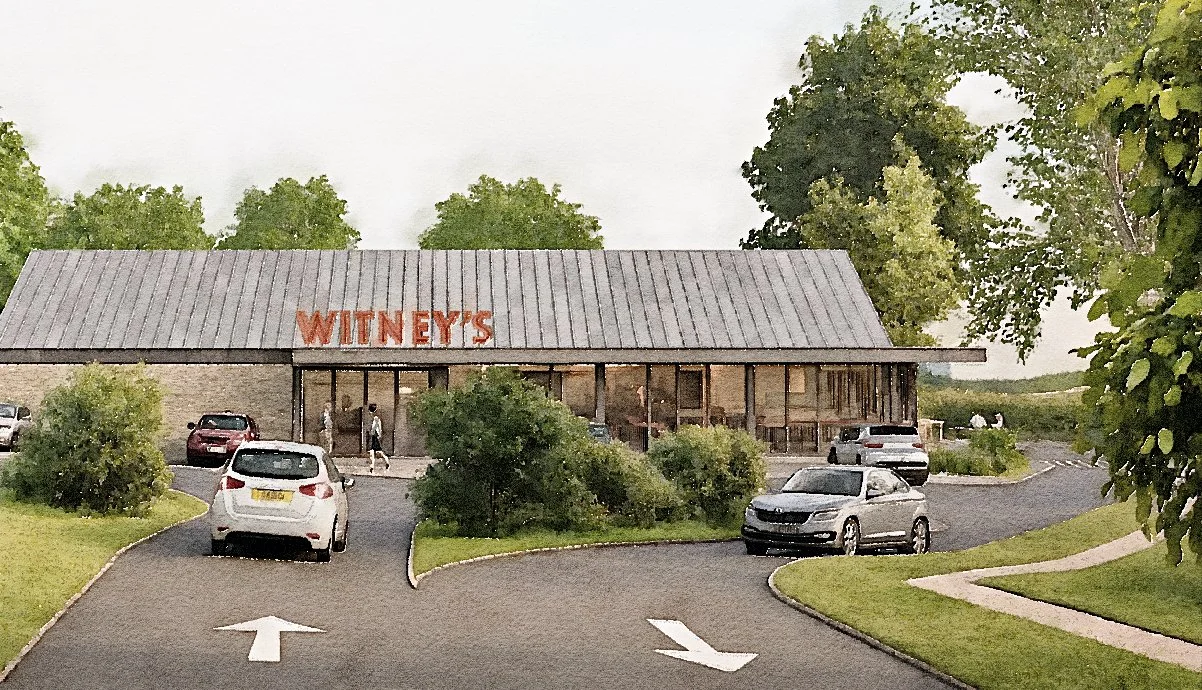
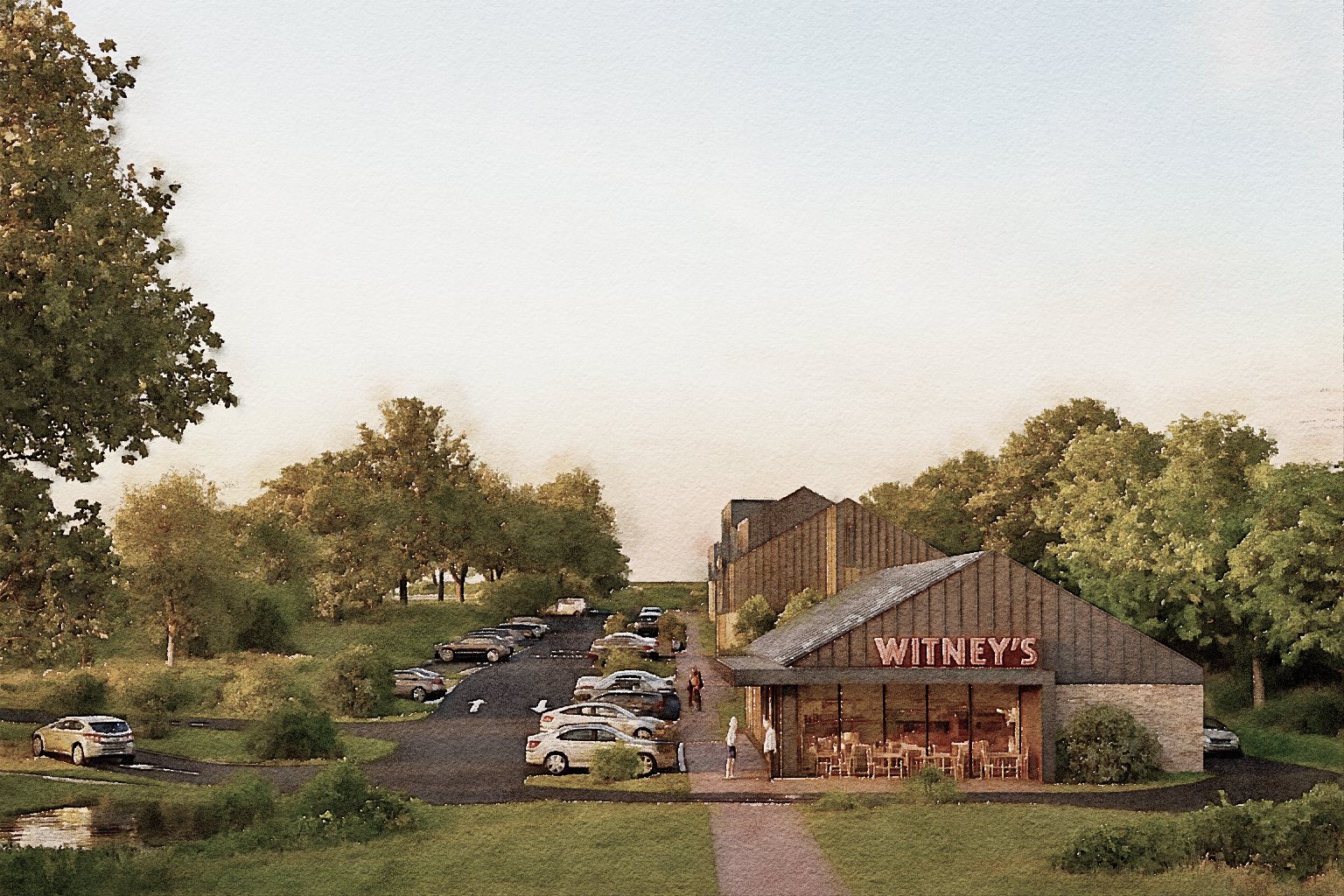
The scheme brings together two complementary uses: a three-storey motel providing flexible short-stay accommodation, and a single-storey diner that serves both guests and passing traffic. The layout is simple and operationally efficient, with clear separation between guest parking, diner parking and drive-through traffic, and safe, legible pedestrian routes throughout.
Architecture is robust and commercially durable, using a restrained palette of Cotswold stone, standing-seam metal roofing and high-performance glazing. The motel’s massing is carefully stepped to reduce visual impact, while the diner is deliberately low and open, presenting a strong public frontage. Both buildings are designed for longevity, ease of maintenance and clear brand presence.
Landscape is integral to the development. Existing mature trees and boundary planting are largely retained, with new native planting used to strengthen screening, enhance biodiversity and create a calm setting despite the busy roadside location. Environmental performance is embedded through an all-electric, fabric-first approach with roof-mounted solar PV.
The Paddocks represents a commercially viable, well-considered reuse of land shaped by infrastructure investment. It delivers new jobs, year-round economic activity and much-needed accommodation, while enhancing a key gateway site on the A40.

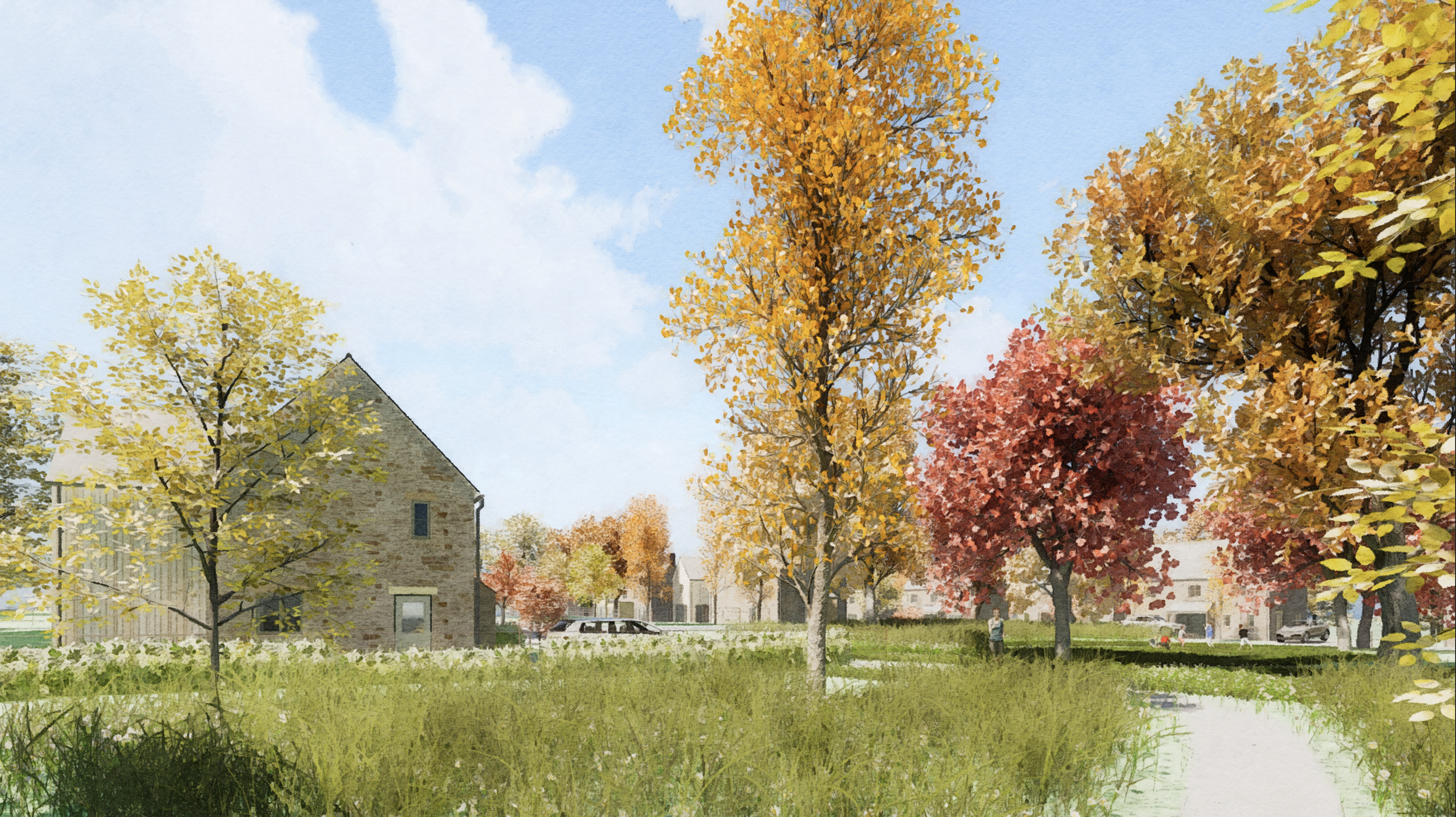
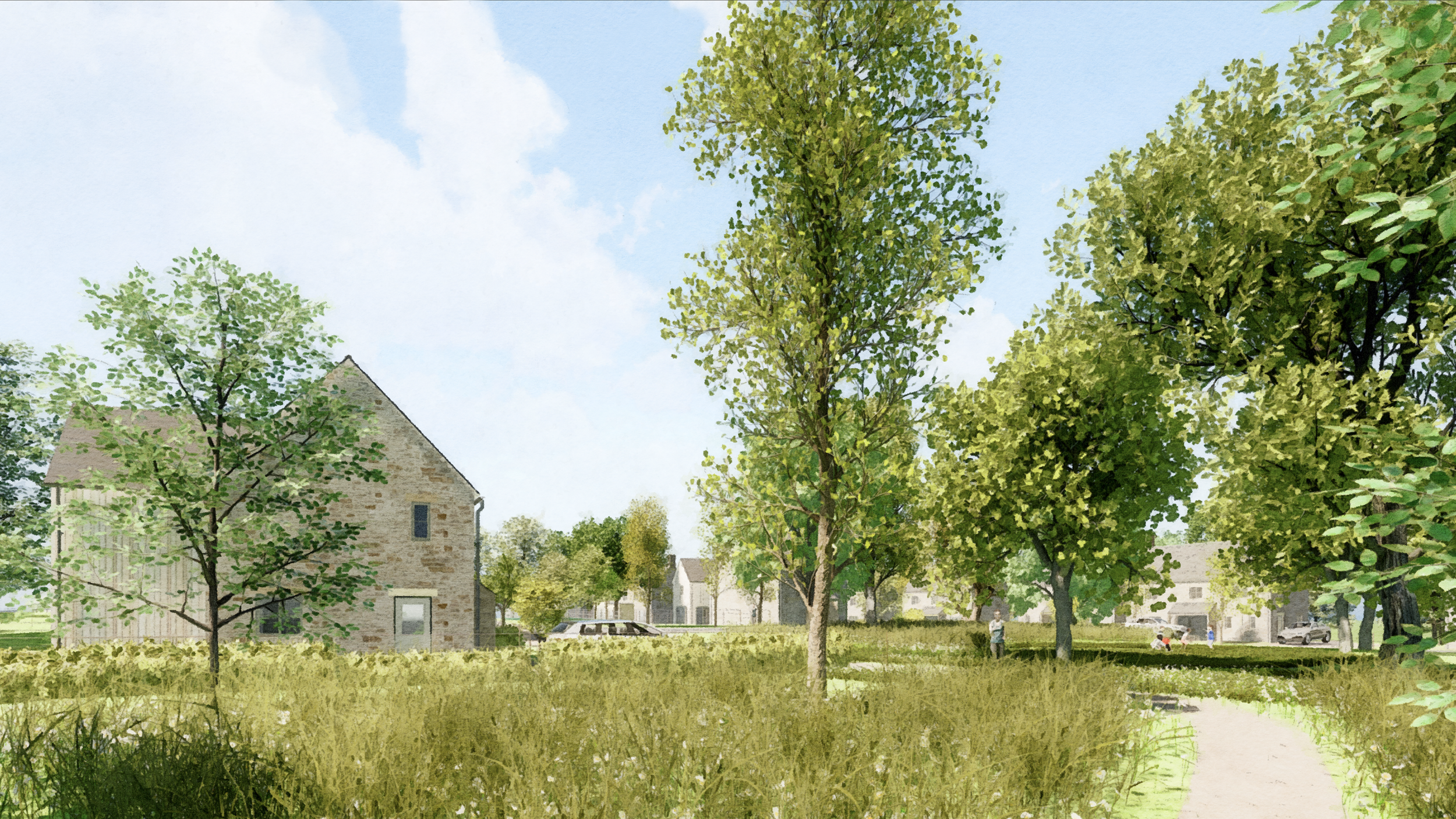
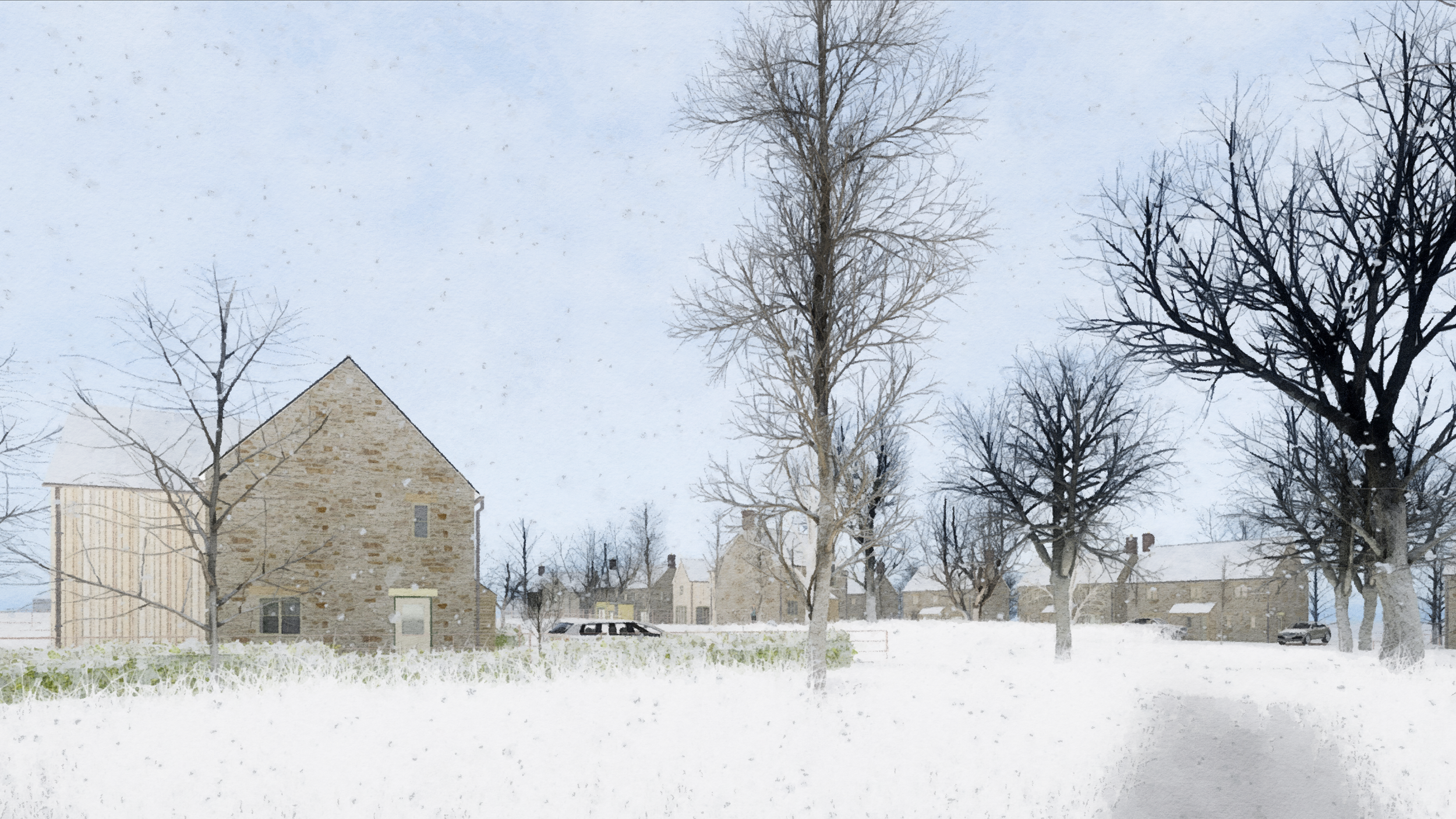
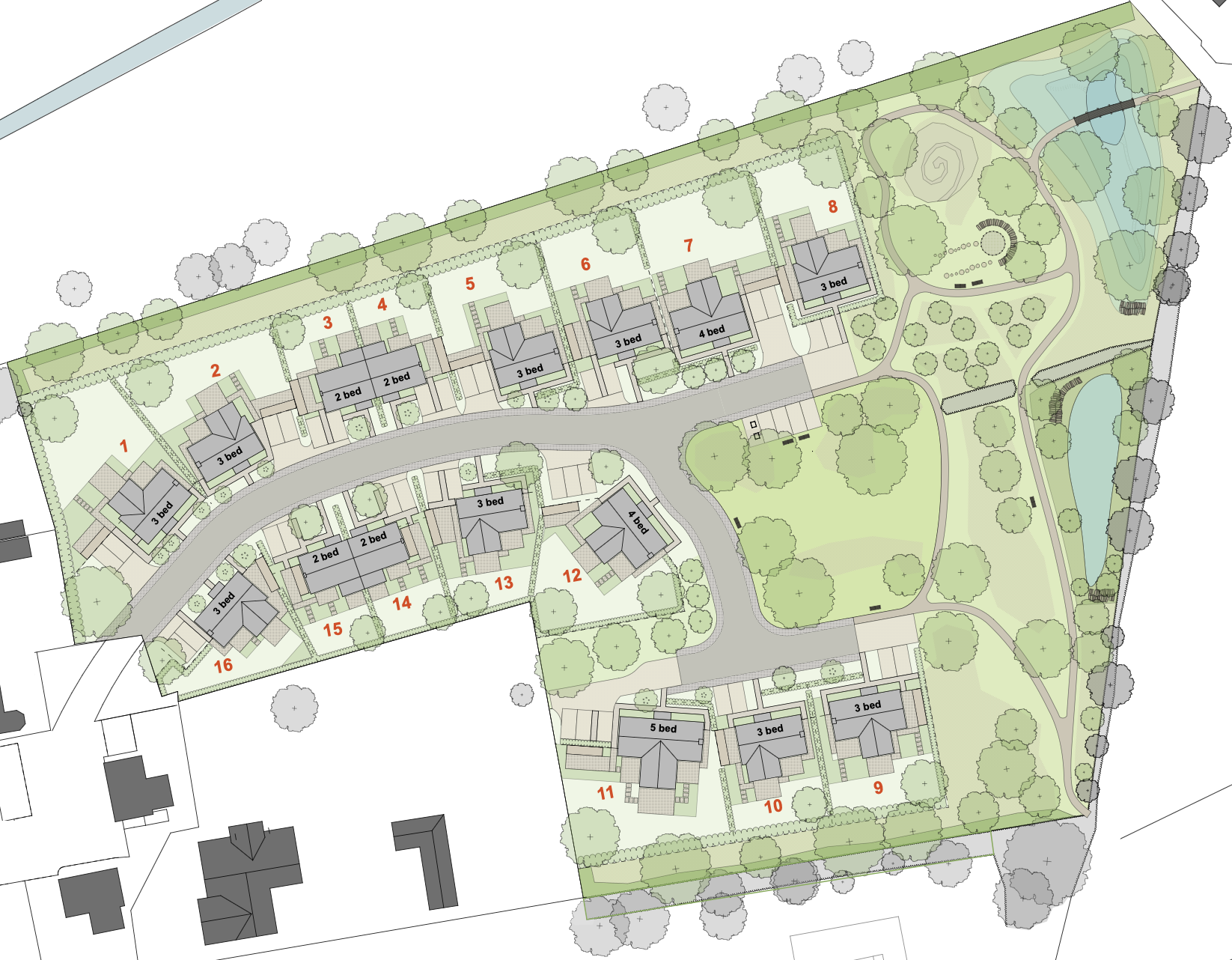
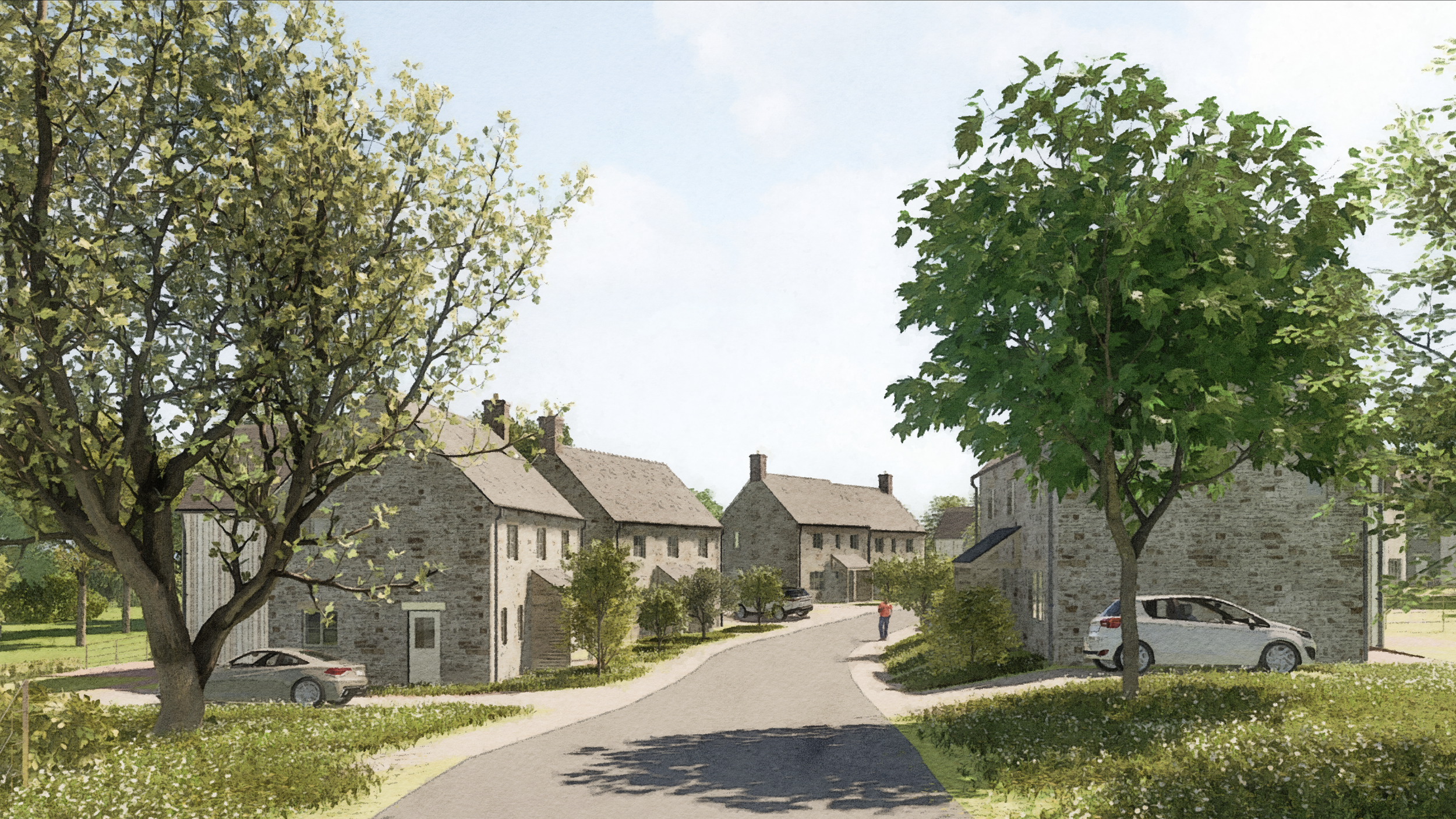
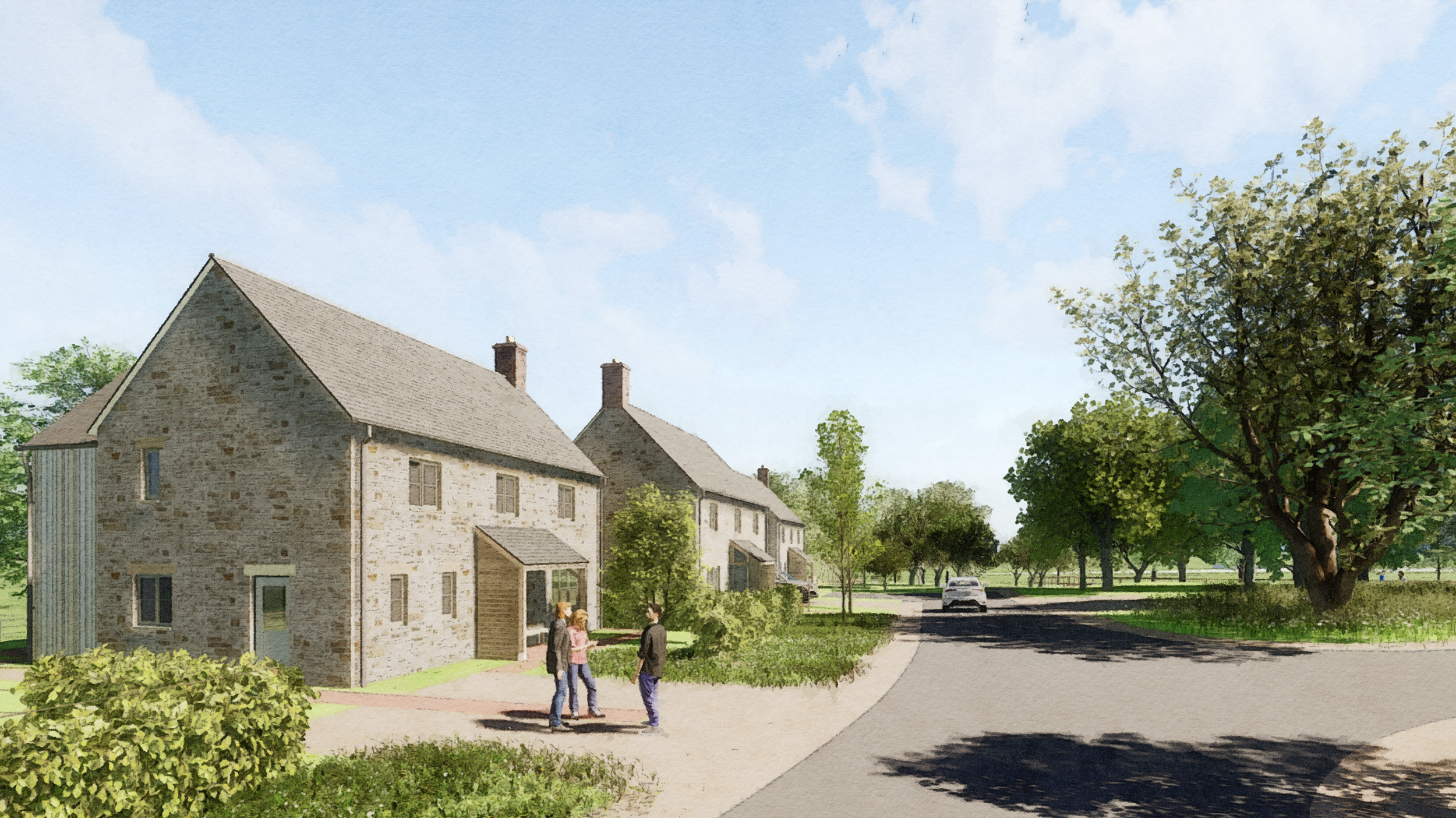
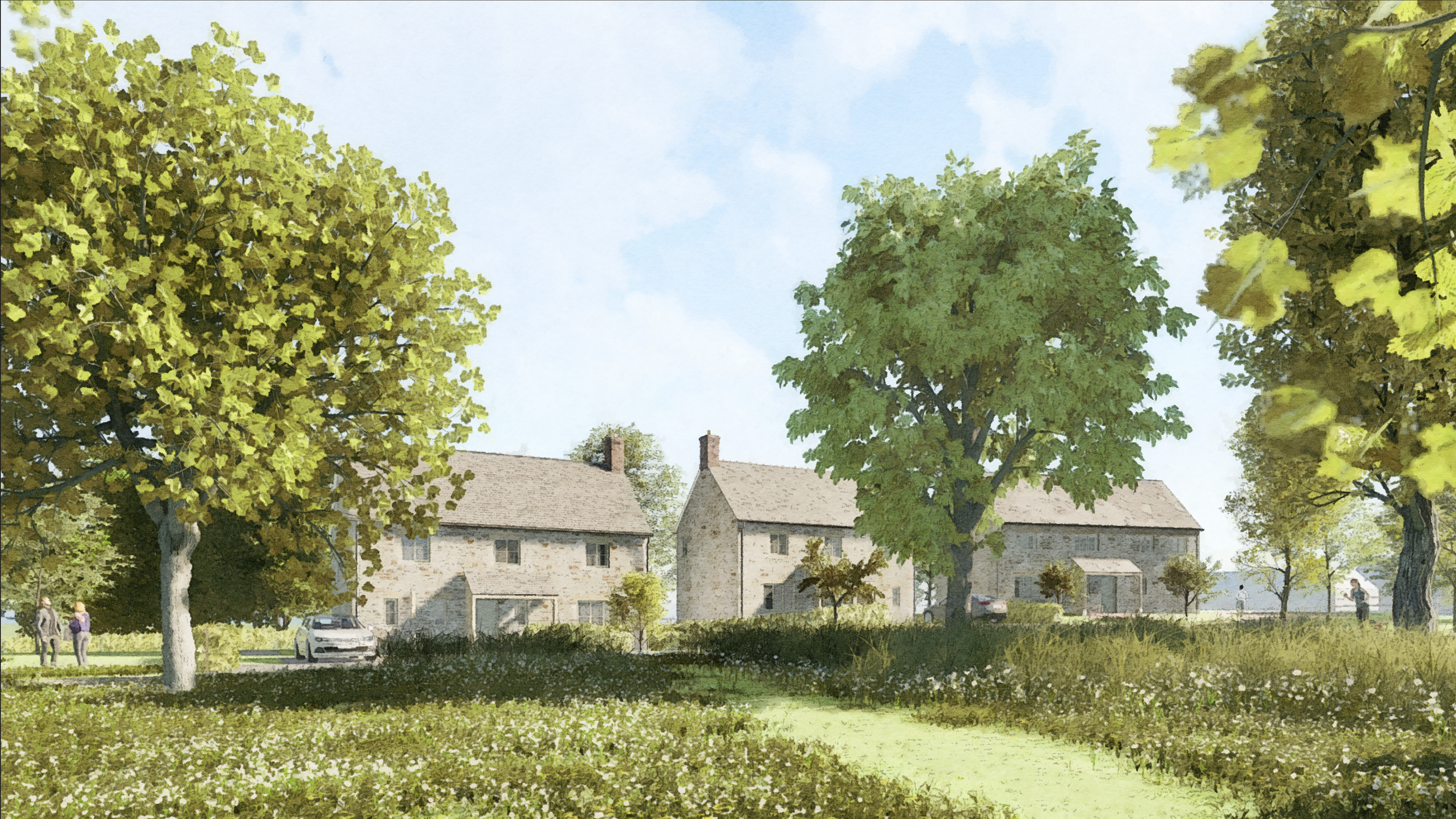
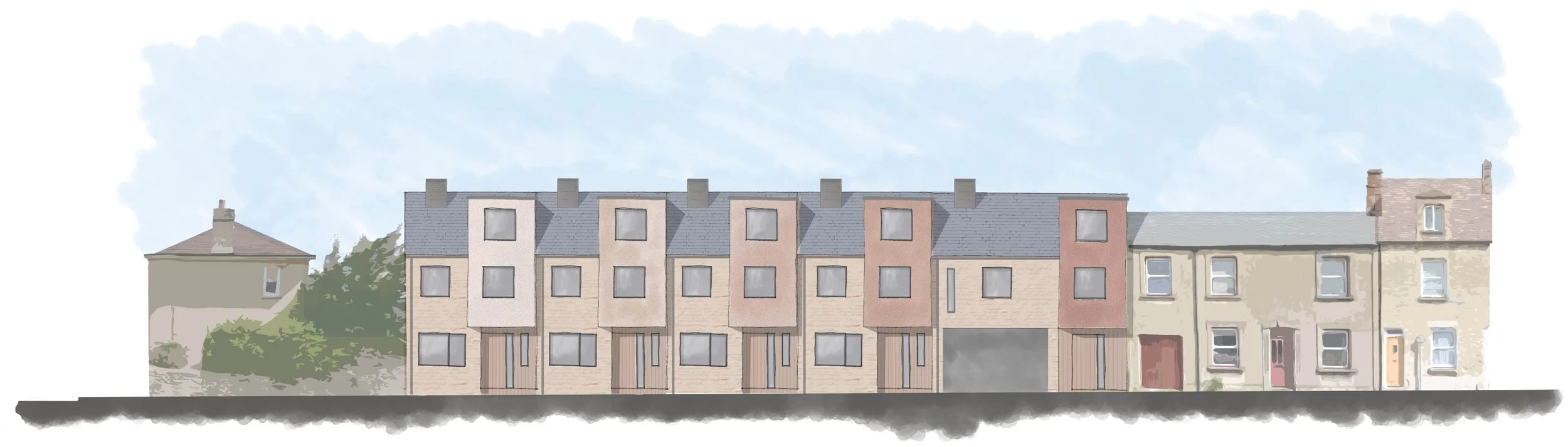
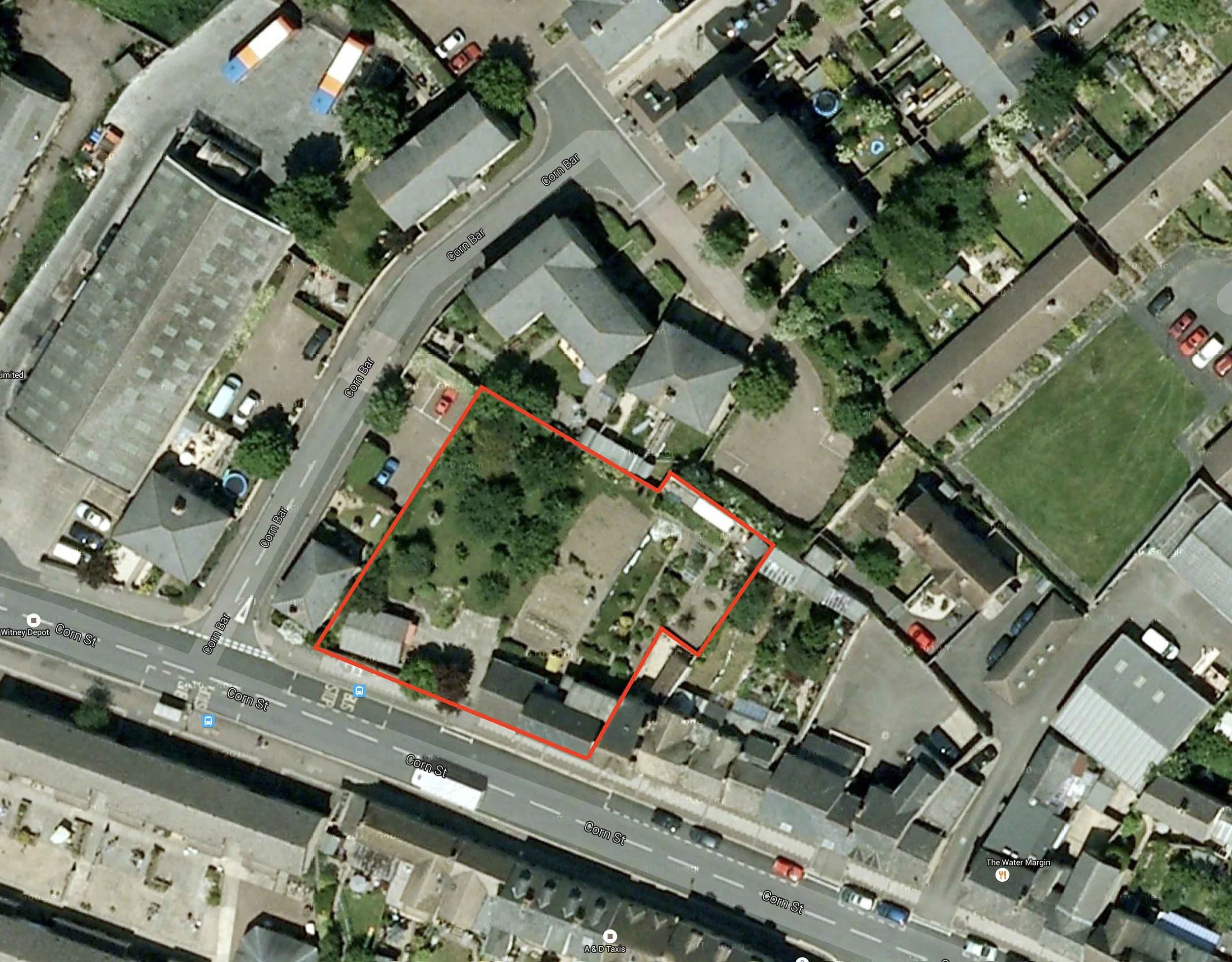
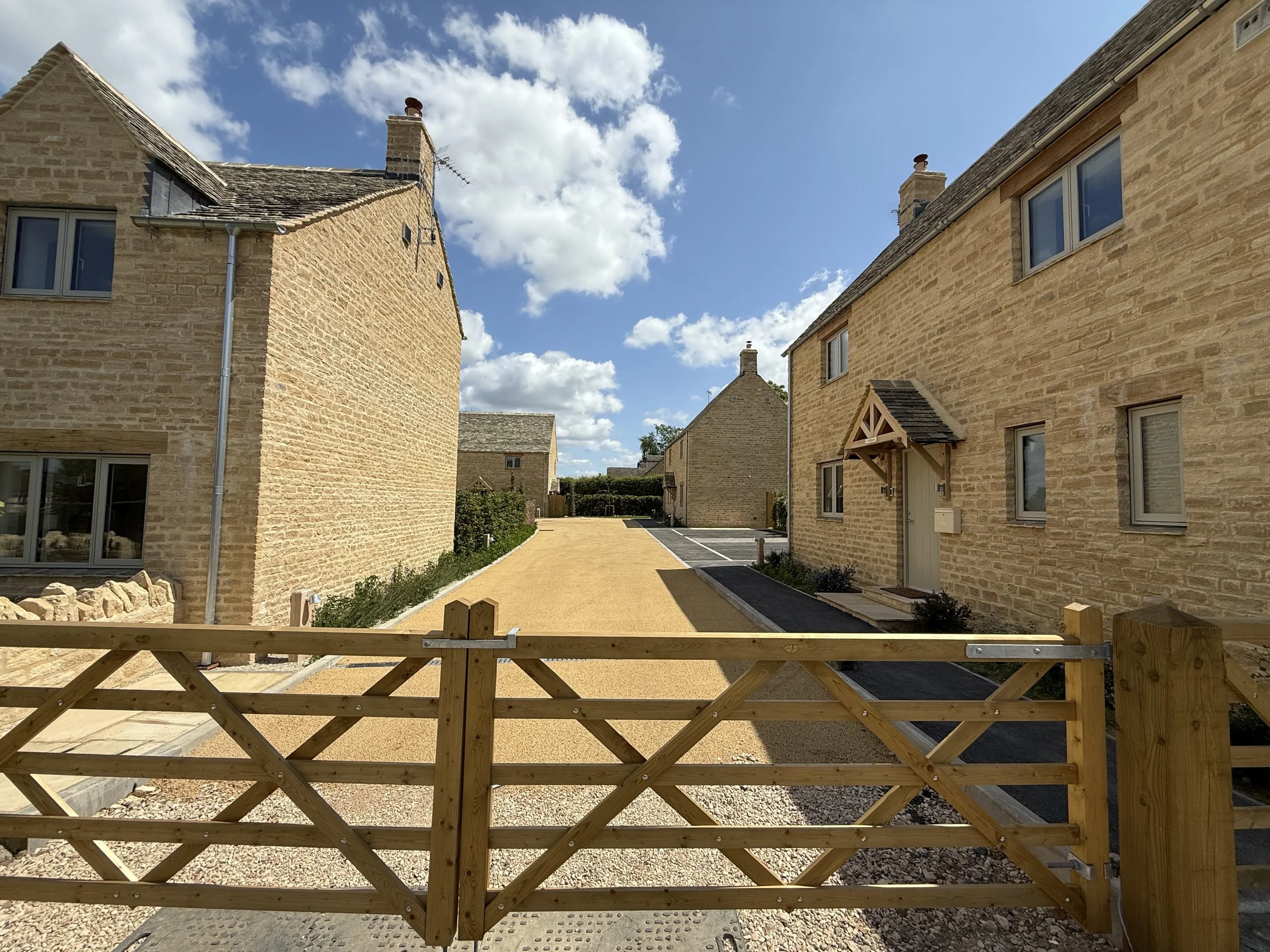
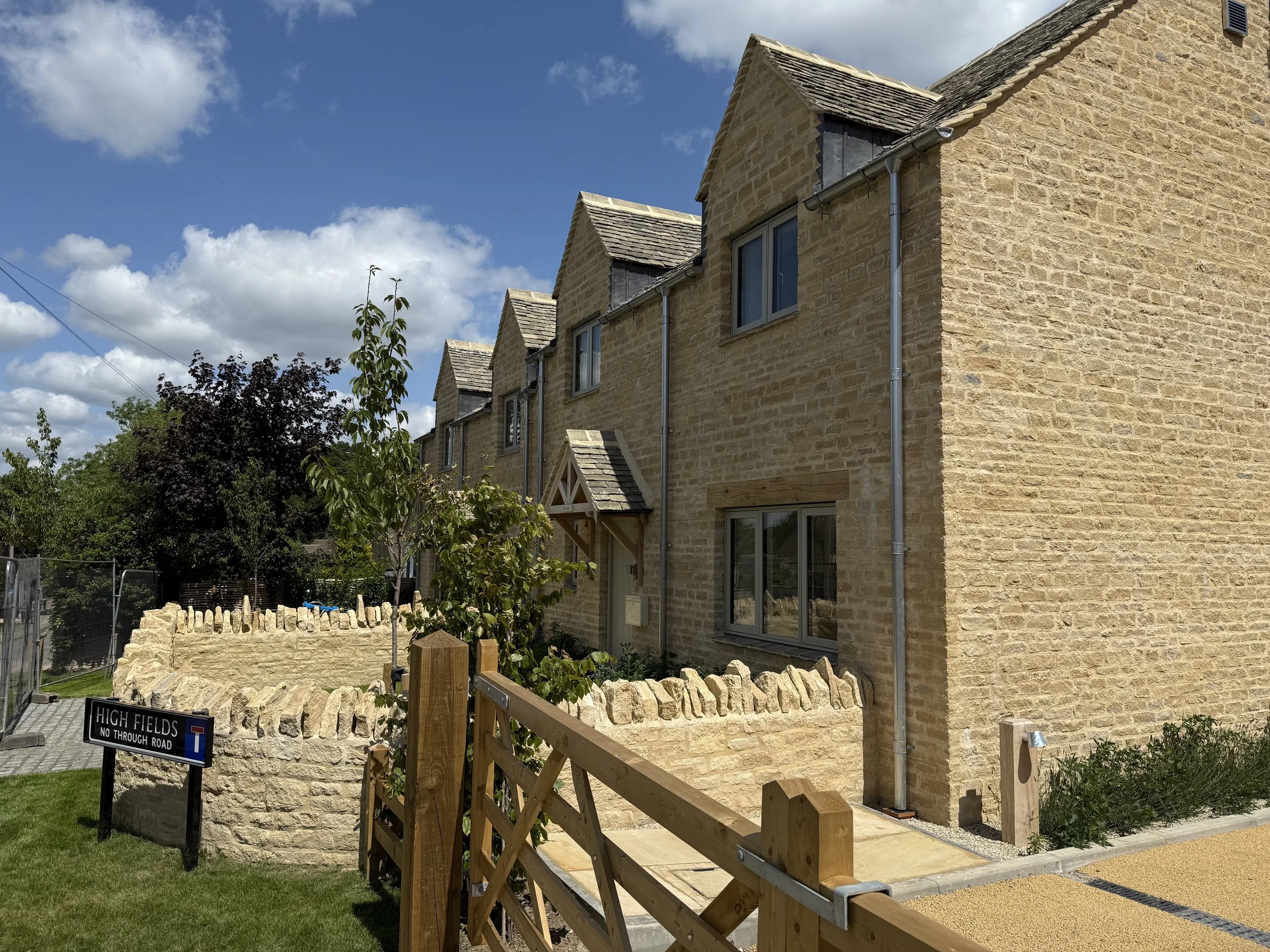
This project redevelops underused land on the edge of an established village to deliver a compact, policy-compliant residential scheme. The site was previously compromised by low-grade commercial use; the proposals unlock its value through a clear, efficient masterplan and a landscape-led approach that de-risks delivery.
Housing is arranged along a simple adoptable access route, balancing density with market expectations for privacy, outlook and green space. Built form is deliberately restrained, allowing the scheme to sit comfortably within its context while maximising developable area.
Landscape, drainage and ecology are integrated from the outset. Existing boundaries are retained and strengthened to provide screening and biodiversity uplift, while on-site SuDS and permeable surfaces resolve drainage without off-site upgrades. Access, servicing and EV provision are fully compliant.
Set within the gently undulating landscape of the Cotswolds, this newly built family home draws inspiration from the region’s vernacular architecture while integrating carefully considered contemporary interventions. Constructed in locally sourced limestone, the principal façade presents a classically proportioned elevation, with parapet gables, prominent stone chimneys, and traditional cut stone quoins and window surrounds.
The house is designed to feel both grounded in its setting and open to its surroundings. Traditional detailing, stone slate roofing, and timber-framed sash windows are complemented by crisp modern additions that enhance the home’s livability. To the rear, a refined zinc-clad pavilion provides a harmonius, elegant contrast to the main solid stone mass of the main house. The pavilion provides a light-filled open space connected to the kitchen for dining and entertaining that opens directly onto the garden on three sides.
The design embraces symmetry and asymmetry with mass and lightness, allowing the house to sit comfortably within its rural context while offering modern functionality. The project reflects a conscious dialogue between vernacular forms and details and contemporary rural living.
DuCroz architects developed a scheme to demolish an existing 1960s bungalow and replace it with a substantial cotswold stone house. Working closely with our client, Vitruvius & Co, a traditional, local vernacular style was adopted with a contemporary internal layout.
Thoughtful discussion and negotiation with neighbours, planners and the parish council led to a successful planning process.
The house is constructed using a Canadian ICF (Insulated Concrete Formwork) system to provide excellent levels on insulation and air tightness. Natural local limestone wraps this modern structure and settles the building into the surrounding Cotswold village.